

Email Verification API: What You Need, How It Works & Why It Matters
An email verification API delivers real-time email validation to ensure addresses are active, deliverable, and legitimate before they hit your database or campaigns. This API for email validation checks syntax, domain existence, mailbox status, and catch-all traps, slashing bounce rates and protecting sender reputation across marketing, sales, and customer onboarding workflows. Businesses using a reliable email verification service see up to 98% deliverability while cutting invalid contacts that waste resources and trigger ISP penalties.
What is an Email Verification API?
An email verification API is a programmable interface that validates email addresses instantly via API calls, returning detailed status reports on syntax, domain health, and mailbox existence. Unlike basic syntax checkers, this email checker API connects to SMTP servers to simulate message delivery without sending actual emails, confirming if inboxes accept connections.
Core components include disposable email detection, role-based address flagging (e.g., info@, support@), and greylisting bypass to handle temporary server delays. Developers integrate it with CRMs, ESPs, or custom apps using simple HTTP requests, getting JSON responses with risk scores and verification verdicts in under 300ms.
How Does Email Verification API Work?
Email verification APIs follow a multi-step process to deliver comprehensive validation beyond surface-level checks. First, syntax validation parses the address against RFC standards, rejecting malformed formats like missing @ symbols or invalid characters.
Next, domain validation performs MX record lookups and DNS checks to confirm the domain hosts legitimate mail servers. The API then attempts SMTP connections, issuing RCPT TO commands to verify mailbox existence without triggering spam filters or full delivery. Advanced services add machine learning to detect toxic patterns, honeypots, and free providers while flagging high-risk addresses for human review.
Why Use an Email Verification API?
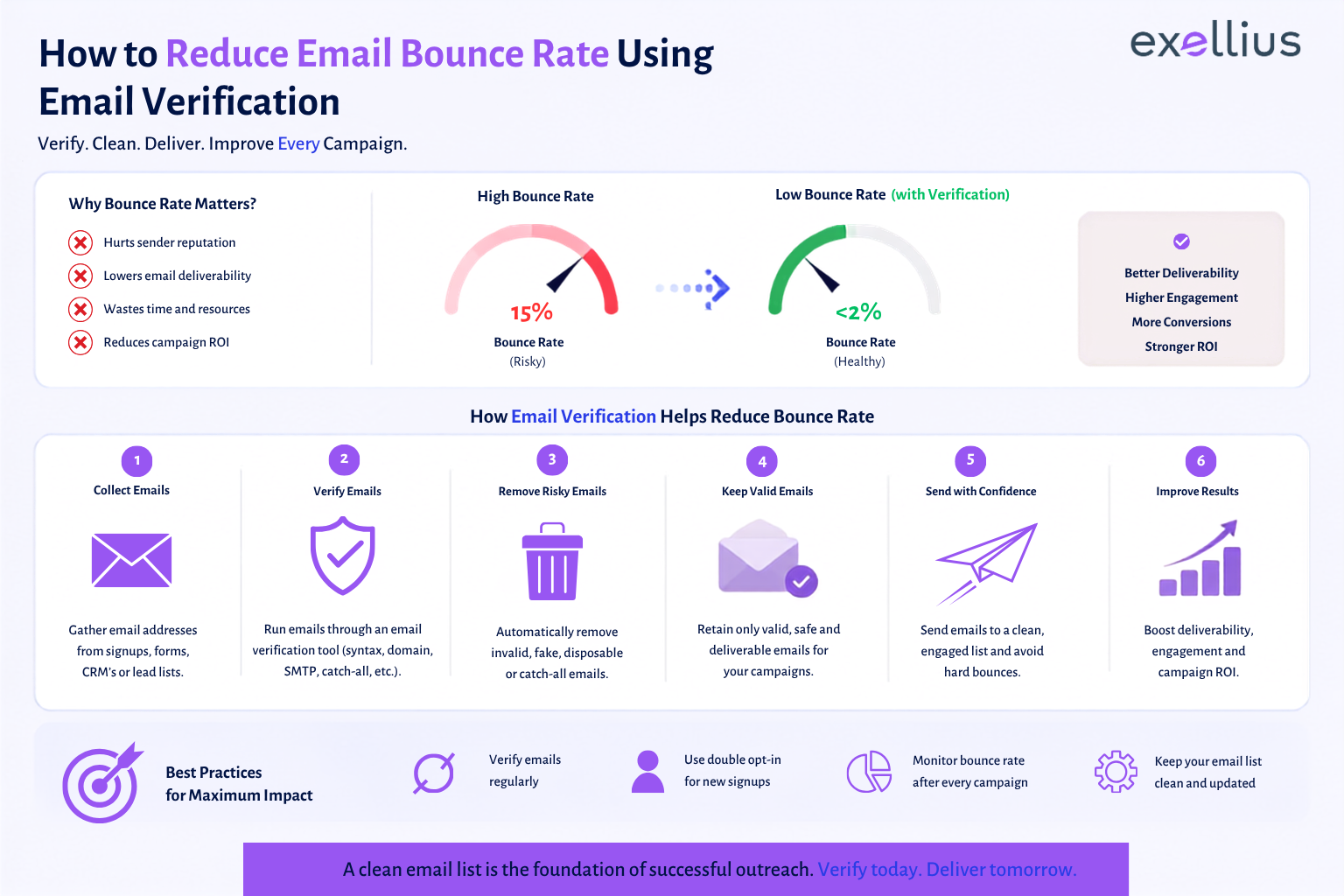
High bounce rates erode sender reputation, land emails in spam folders, and inflate costs—issues an email verification API resolves systematically. Marketers achieve email hygiene by maintaining lists under 2% bounce thresholds required by ESPs like Mailchimp or SendGrid, ensuring consistent inbox placement.
Sales teams benefit from verify business emails during lead capture, reducing wasted outreach to invalid contacts by 30-50% while complying with GDPR/CAN-SPAM data quality mandates. For e-commerce, real-time email verification at checkout cuts fraud and abandoned carts from fake signups, boosting revenue recovery.
Key Features of Top Email Verification APIs
Select an email verification tool with robust capabilities for scalable, accurate validation across high volumes.
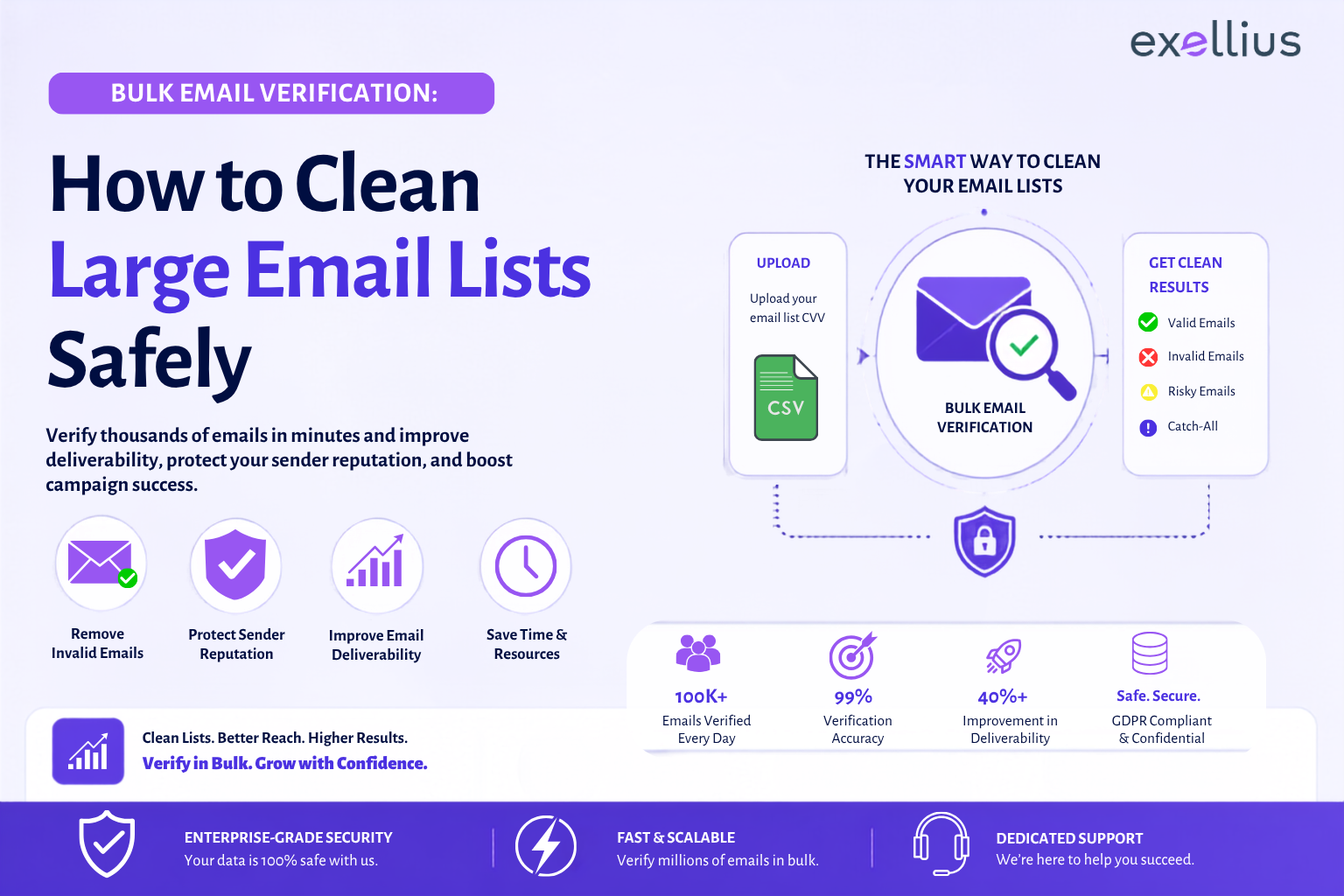
- Real-Time and Bulk Email Verification: Supports single API calls for instant checks plus batch processing for lists up to millions, with queueing for speed.
- Comprehensive Risk Scoring: Assigns 0-10 scores factoring toxicity, disposable domains, role accounts, and delivery confidence.
- Global Coverage and Catch-All Detection: Handles international domains, subdomains, and identifies servers accepting all addresses without verification.
- Integrations and Webhooks: Plug-and-play with Zapier, HubSpot, Salesforce, plus event-driven alerts for failed verifications.
- Detailed Reporting and Dashboards: Tracks verification history, bounce predictions, and ROI metrics like cost per validated lead.
Implementing Email Verification API: Step-by-Step
Integration takes minutes with SDKs for most languages, but follow this workflow for optimal results.
- Sign up for an API key from a provider offering high uptime and pay-as-you-go pricing starting at $0.005 per verification.
- Add single verification to forms: Call the API on blur or submit, blocking invalid entries with user-friendly messages.
- Set up bulk email verification for imports: Upload CSVs via dashboard or API, scheduling nightly cleanses for CRM hygiene.
- Monitor via webhooks: Receive notifications for list suppression updates or sudden bounce spikes signaling domain issues.
- Test thoroughly: Verify 100-sample lists against known good/bad addresses to benchmark accuracy above 98%.
Email Verification API vs. Traditional Methods
| Aspect | Email Verification API | Manual List Cleaning | Free Syntax Checkers |
| Speed | Real-time (<500ms) | Days/weeks | Instant but shallow |
| Accuracy | 98%+ with SMTP | 70-80% human error | 60% misses MX/mailbox |
| Scalability | Millions/day | Limited by staff | No bulk/server checks |
| Cost | $0.003-$0.01/verify | Labor intensive | Free but ineffective |
| Compliance | GDPR-ready suppression | Manual risks | No risk data |
APIs outperform by automating deep checks at scale, delivering ROI through 20-40% bounce reductions.
Real-World Impact and ROI Metrics
Companies integrating email verification APIs report 25% higher open rates, 15% lower churn from bad data, and $3-5 saved per validated lead. E-commerce platforms using bulk email verification cut chargebacks 18% by blocking fake accounts early. For B2B data, an API email validator ensures sales sequences hit decision-makers, lifting reply rates 12-20%.
Track success with metrics like bounce-to-verified ratio, deliverability scores, and acquisition cost per valid contact. Providers offering free credits let teams pilot without commitment, proving value before scaling.

Leave a Reply