
B2B lead enrichment is the process of enhancing existing lead data by adding accurate, verified, and actionable information, such as job roles, company details, firmographics, technographics, and buyer intent signals, to create a complete and reliable lead profile.
Most raw lead data is incomplete, making it difficult to drive effective and personalized sales engagement. Lead enrichment fills these gaps by appending missing fields, validating contact information, and continuously updating records to maintain data freshness.
B2B lead enrichment transforms incomplete or outdated records into high-quality, sales-ready profiles, enabling precise segmentation, personalized outreach, and more relevant engagement. The result is not just cleaner CRM data, but a measurable improvement in targeting accuracy, campaign performance, and overall conversion rates.
What Is B2B Lead Enrichment?
B2B lead enrichment is the process of enhancing existing lead data with verified details such as job roles, company information, and intent signals.
It helps convert incomplete records into accurate, sales-ready profiles that improve targeting, personalization, and conversion outcomes.
Lead enrichment meaning
- Start with basic data: name, email, company
- Add enriched data: job title, company size, industry, verified contacts, intent signals
- End result: a complete, actionable lead profile
This process is also commonly referred to as:
- Contact enrichment
- CRM data enrichment
- Account or company enrichment
Why enrichment is critical
B2B databases are constantly degrading due to data decay:
- People change jobs
- Companies evolve
- Emails become invalid
In fact, a significant portion of CRM data becomes outdated every year. Without enrichment, your database becomes unreliable, impacting campaign performance, sales productivity, and revenue outcomes.
Why Lead Enrichment Matters in 2026
In 2026, B2B growth depends on data precision, speed, and relevance. Buyers expect personalized engagement, and generic outreach no longer delivers results.
Key challenges without lead enrichment
- Incomplete or inaccurate lead data
- Poor segmentation and targeting
- High bounce rates and low deliverability
- Inefficient sales prospecting
- Reduced marketing ROI
What has changed in 2026
- Sales teams rely on real-time sales prospecting data
- Marketing teams use behavioral data and buyer signals
- Decision-making is driven by data completeness and accuracy
Key insight
Modern revenue teams are shifting from static databases to dynamic data ecosystems. Instead of enriching leads once, they continuously update data through real-time enrichment workflows powered by APIs.
This shift ensures:
- Data freshness
- Higher accuracy
- Better alignment between sales and marketing
What Data Gets Enriched?
Effective b2b data enrichment includes multiple data layers that provide both company-level and individual-level insights.
Firmographic Enrichment
Includes company-level attributes:
- Industry
- Company size
- Revenue
- Location
Technographic Enrichment
Captures technology stack details:
- CRM systems
- Marketing tools
- SaaS platforms
Contact Enrichment
Enhances individual-level information:
- Job title and seniority
- Verified email enrichment
- Phone enrichment
Intent & Behavioral Enrichment
Tracks buyer signals:
- Website visits
- Content engagement
- Research activity
Quick Process Overview
B2B lead enrichment typically follows a simple workflow:
Capture data → Enrich and verify → Sync and maintain in CRM
How Does B2B Lead Enrichment Work?
The lead enrichment process is best understood as a continuous workflow rather than a one-time activity.
Step 1: Capture Raw Data
Leads are collected through:
- Website forms
- Webinar registrations
- Events and campaigns
- CRM imports
At this stage, data is typically incomplete.
Step 2: Enrich Data
Enrichment tools or APIs append missing information:
- Firmographic enrichment
- Contact enrichment (email, phone)
- Technographic and intent data
Platforms like Exellius enable this process in real time, ensuring verified contact data and improved CRM hygiene without manual effort.
Step 3: Validate and Verify
This step ensures:
- Email verification (reducing bounce rates)
- Phone number accuracy
- Data consistency
This is critical for maintaining data quality and deliverability.
Step 4: Sync with CRM and Tools
Enriched data is automatically pushed into:
- CRM systems
- Sales engagement platforms
- Marketing automation tools
Step 5: Continuous Enrichment
Data is refreshed regularly to maintain:
- Data freshness
- Accuracy
- Completeness
This step differentiates modern enrichment workflows from traditional methods.
What Are the Benefits of B2B Lead Enrichment?
1. Improved Data Quality
Enrichment enhances:
- Data completeness
- Accuracy
- Freshness
2. Better Targeting and Segmentation
Firmographic and behavioral data allow precise audience targeting.
3. Higher Conversion Rates
Relevant and personalized outreach increases engagement and conversions.
4. Reduced Bounce Rates
Verified contact data improves email deliverability and protects sender reputation.
5. Increased Sales Productivity
Sales teams spend less time researching and more time closing deals.
6. Faster Time-to-Revenue
High-quality data accelerates the entire sales cycle.
7. Stronger CRM Hygiene
Regular enrichment keeps CRM systems clean, updated, and reliable.
Lead Enrichment Examples & Use Cases
Initial Data Captured:
- Name
After Enrichment:
- Job title and seniority
- Company size and industry
- Technographic data
- Verified email and phone
- Intent signals
Outcome:
- Segmentation by role and company size
- Personalized email campaigns
- Higher response and conversion rates
Use Case 1: Sales Prospecting
- Identify decision-makers
- Access verified contact data
- Prioritize leads using intent signals
Use Case 2: Account-Based Marketing (ABM)
- Enrich accounts with firmographic and technographic insights
- Identify key stakeholders
- Deliver targeted campaigns
Use Case 3: CRM Data Enrichment & Hygiene
- Update outdated records
- Remove duplicates
- Maintain data completeness
Use Case 4: Pipeline Acceleration
- Focus on high-intent leads
- Improve lead scoring accuracy
- Shorten sales cycles
What Are the Common B2B Lead Enrichment Mistakes?
1. Treating Enrichment as a One-Time Activity
Data constantly changes, making one-time enrichment ineffective.
2. Ignoring Data Verification
Unverified data leads to:
- High bounce rates
- Poor deliverability
- Damaged sender reputation
3. Over-Enriching with Irrelevant Data
Adding unnecessary fields creates noise instead of value.
4. Not Integrating with Workflows
Enrichment must be embedded into CRM and sales processes.
5. Using Static Data Sources
Modern enrichment requires real-time APIs and continuous updates.
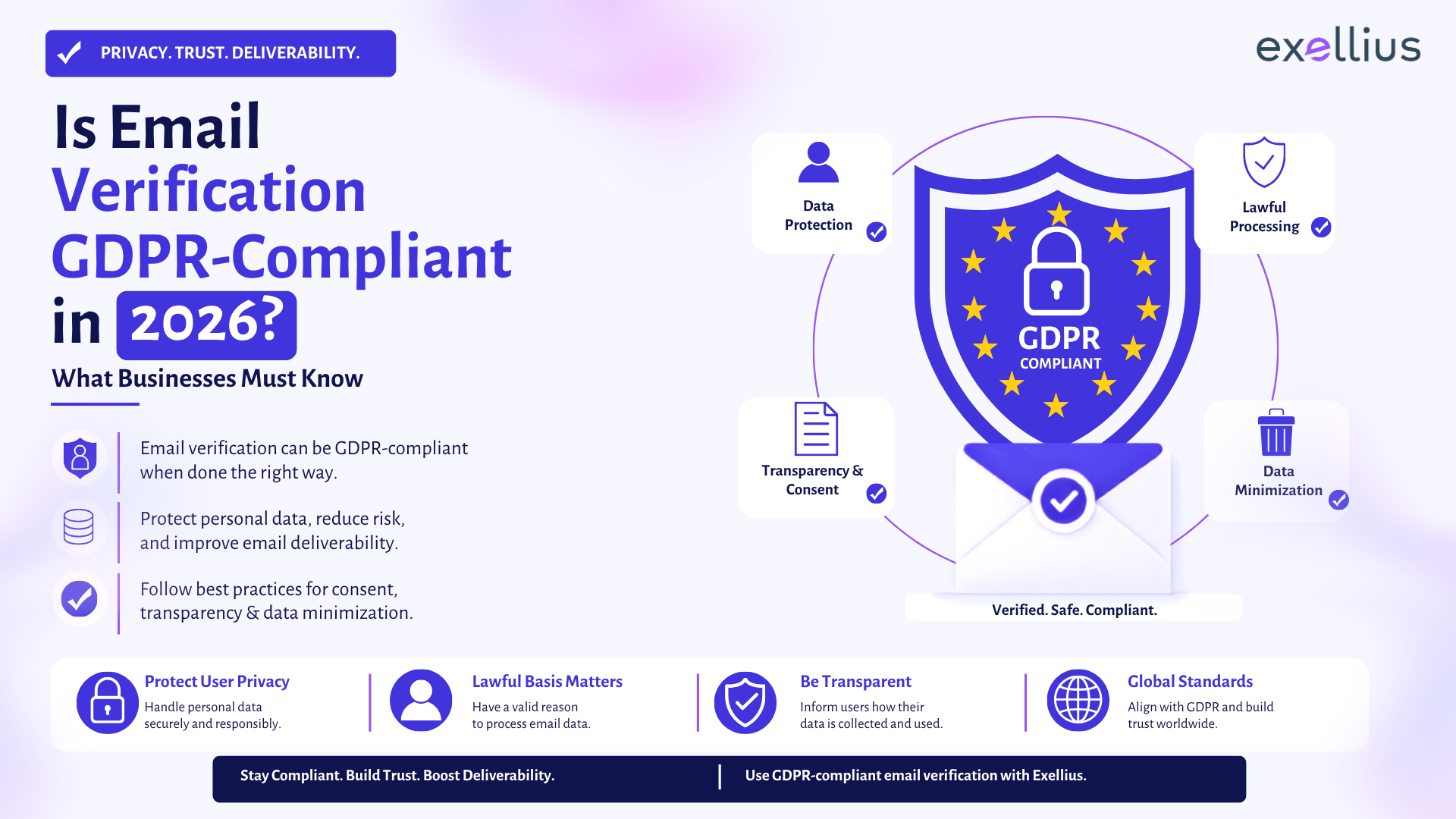
6. Ignoring Compliance and Data Privacy
Ensure enrichment practices align with regulations like GDPR and data protection standards.
Data Quality and Compliance Considerations
When implementing B2B lead enrichment, organizations must ensure responsible data usage.
Following regulations like GDPR and using compliant data sources helps maintain trust and reduce risk.
Prioritizing verified and permission-based data also improves deliverability and long-term CRM reliability.
Data Quality and Compliance Considerations
When implementing B2B lead enrichment, it is important to ensure responsible data usage.
Organizations should follow data privacy regulations such as GDPR and maintain transparency in how contact data is collected and used.
Additionally, prioritizing verified and compliant data sources helps reduce risk, improve deliverability, and maintain trust across sales and marketing efforts.
Best B2B Lead Enrichment Tools in 2026
The best B2B lead enrichment tools in 2026 are those that provide real-time, accurate, and workflow-integrated data enrichment rather than relying on static data appending.
Instead of focusing only on vendor comparisons, businesses should evaluate tools based on how effectively they improve data quality, maintain data freshness, automate enrichment workflows, and integrate with revenue systems.
Exellius
Exellius is designed with a verification-first approach to lead enrichment.
Strengths:
- Real-time enrichment APIs for continuous data updates
- Verified email and phone data to support deliverability
- CRM sync and workflow automation
- Focus on data freshness and reducing bounce rates
Best suited for:
- Teams prioritizing data accuracy and CRM hygiene
- Organizations looking to improve deliverability and enrichment workflows
Apollo.io
Apollo.io combines lead enrichment with outbound prospecting and engagement features.
Strengths:
- Integrated prospecting and enrichment capabilities
- Large global contact database
- Built-in outbound and sequencing tools
- Transparent pricing and accessibility for smaller teams
Best suited for:
- SDR teams and startups needing all-in-one prospecting + outreach
- Teams prioritizing execution speed and affordability
ZoomInfo
ZoomInfo operates as an enterprise-grade data intelligence platform with enrichment capabilities.
Strengths:
- Extensive company and contact database
- Data-as-a-Service (DaaS) enrichment pipelines
- Advanced intent data and buyer signals
- Strong integrations for enterprise workflows
Best suited for:
- Large organizations requiring deep market intelligence and scale
- RevOps teams focused on intent-driven targeting and segmentation
How to Find the Best B2B Lead Enrichment Tools
1. Real-Time Data Enrichment Capabilities
Modern enrichment tools should support:
- API-based, real-time enrichment
- Continuous data updates
- Instant data appending during lead capture
2. Verified Contact Data
Look for tools that provide:
- Email verification
- Phone number validation
- Bounce-rate reduction mechanisms
3. Depth of Data Coverage
The best tools go beyond basic fields and include:
- Firmographic enrichment (company size, industry)
- Technographic enrichment (tools and platforms used)
- Intent and behavioral data
4. CRM and Workflow Integration
Effective tools should integrate seamlessly with:
- CRM systems
- Marketing automation platforms
- Sales engagement tools
5. Automation and Scalability
Look for features like:
- Automated enrichment workflows
- Bulk and real-time processing
- Scalable infrastructure for growing data needs
6. Data Freshness and Decay Management
Top tools actively handle:
- Data decay
- Record updates
- Continuous syncing
7. Compliance and Data Security
Ensure the tool follows:
- GDPR and data privacy regulations
- Secure data handling practices
Practical Insight
In 2026, the “best” B2B lead enrichment tool is not defined by the size of its database—but by how well it fits into a continuous enrichment workflow.
High-performing teams prioritize:
- Real-time enrichment over static lists
- Verified data over volume
- Workflow integration over standalone tools
A platform like Exellius fits into this model by combining real-time enrichment, verified contact data, and CRM integration, helping teams maintain high data quality without manual effort.
FAQs
What does B2B lead enrichment include?
B2B lead enrichment includes adding and validating key data points such as job roles, company details (industry, size), verified email and phone numbers, and intent signals. The goal is to turn basic lead data into a complete, actionable profile for sales and marketing.
How is lead enrichment different from lead generation?
Lead generation focuses on acquiring new contacts, while lead enrichment improves the depth, accuracy, and usability of those contacts. Both work together, generation fills the pipeline, enrichment makes it effective.
Which data fields have the highest impact when enriching leads?
The most impactful fields include:
- Job title and seniority
- Company size and industry
- Verified email and phone number
- Technographic data
- Buyer intent signals
These fields directly influence targeting, personalization, and conversion rates.
How often should you update CRM data?
CRM data should ideally be enriched in real time using APIs or automated workflows. At a minimum, businesses should refresh their data monthly to maintain accuracy and prevent data decay.
How does lead enrichment improve email deliverability?
Lead enrichment improves deliverability by validating email addresses and removing invalid or outdated contacts. This reduces bounce rates and helps maintain a strong sender reputation.
Why is data freshness critical in lead enrichment?
B2B data changes frequently due to job switches and company updates. Without regular enrichment, outdated data leads to poor targeting, failed outreach, and lower campaign performance. Continuous updates ensure relevance and accuracy.
Can lead enrichment improve sales productivity?
Yes. Enriched data reduces the need for manual research by providing complete and verified information upfront. This allows sales teams to focus more on outreach and closing deals rather than data gathering.
How does lead enrichment support better targeting and personalization?
By adding firmographic, technographic, and behavioral insights, lead enrichment enables more precise segmentation and highly personalized messaging, resulting in better engagement and higher conversion rates.
Closing Summary
B2B lead enrichment is no longer a one-time data activity—it is a continuous process that directly impacts CRM accuracy, campaign performance, and revenue outcomes.
Teams that invest in real-time enrichment workflows are better positioned to:
- Maintain clean and reliable CRM data
- Improve email deliverability and reduce bounce rates
- Enable precise targeting and personalization at scale
To operationalize this effectively, businesses should adopt platforms that support verified data enrichment, CRM integration, and continuous data updates. Solutions like Exellius’ Data Enrichment Suite and Data Platform can help streamline this process by ensuring data accuracy and freshness across the revenue stack.
Leave a Reply